
How Visionframe works
A normal vision board expects you to already know what you want. Visionframe helps you discover it by generating options, capturing your preference signals, and letting you refine what feels right.
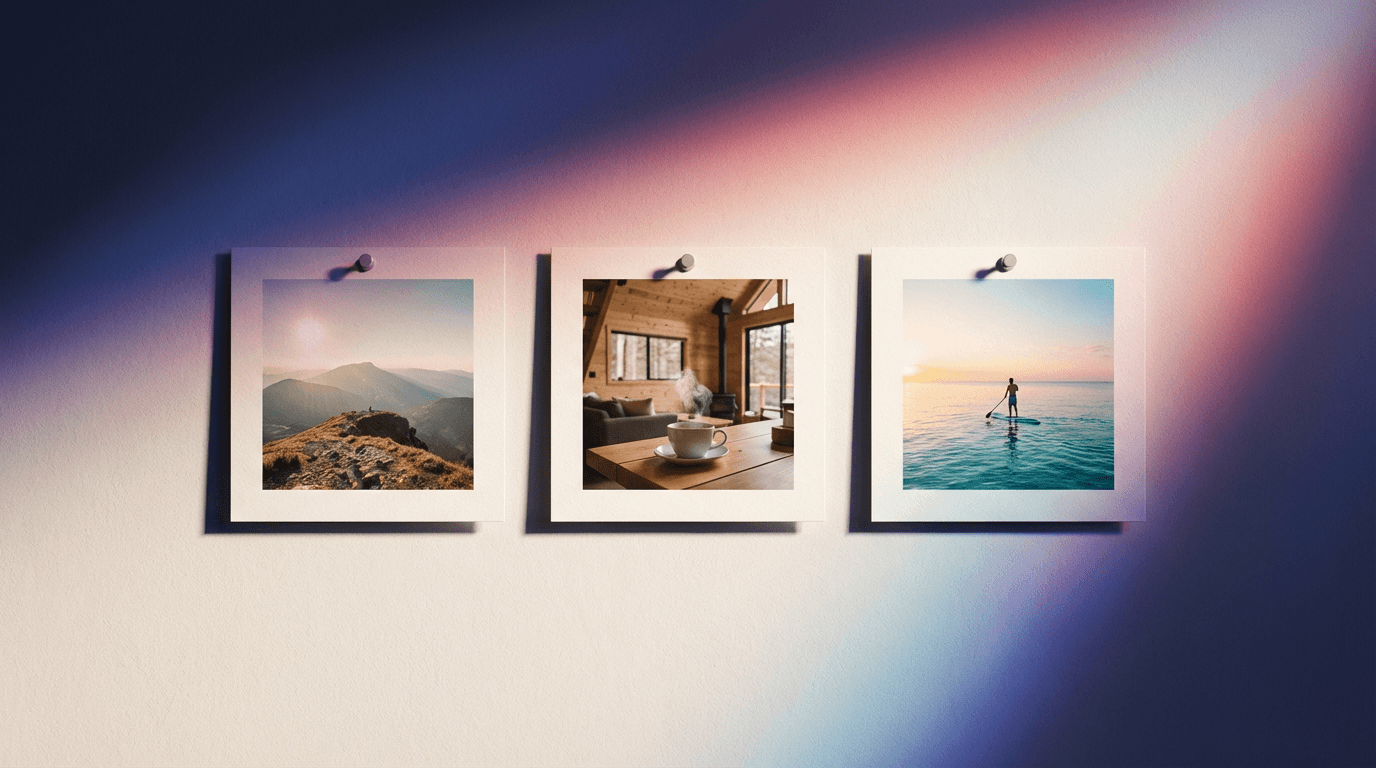
The flow: idea → directions → alignment
Visionframe is designed for the moment between "I want something" and "I'm ready to commit." You can start vague, explore different directions, then tighten the match until your vision feels like yours.
If you like the word "manifestation," this is the grounded version: you don't force belief. You build clarity, then make it easier for consistent action to follow.
Step 1
Describe
Share a sentence, a mood, or a messy paragraph. You can be specific — or not.
Step 2
See directions
Get distinct visual directions. The point is contrast — it helps your clarity emerge quickly.
Step 3
Choose & refine
Pick the one that feels right, then generate refinements to tighten alignment.
Why multiple directions matter
When you see only one image, you can mistake "pretty" for "aligned." When you see a few different directions, your reaction becomes obvious: you learn what energizes you, what calms you, and what feels like a performance.
Over time, your choices become signals — and those signals make future generations feel more like you.

Why this works (in real life)
Visionframe is built around how humans actually decide and follow through: we need concrete pictures, emotional signal, and a process we can repeat — not one perfect fantasy.
Concrete details beat abstract goals
"Freedom" can mean a quiet morning routine, a travel-heavy life, or a calm schedule with more time for family. Images make the difference visible, so you can choose the version that fits.
Process thinking beats outcome fantasizing
Refinement nudges you into the day-to-day reality: light, textures, setting, mood, and routine. That "how it feels" focus is what turns a wish into a direction you can sustain.
Alignment shows up as a body signal
Your reaction is data. When a direction is right, it tends to feel like expansion, relief, or clean energy. When it's wrong, it feels like effort or performance.
A board becomes a decision filter
Saving to a board gives you a single place to revisit what you chose on purpose. Over time, it becomes a quiet "yes/no" filter for new ideas, opportunities, and habits.
Next step (coming later): we'll add a lightweight "Obstacle → If-then plan" bridge so you can turn your chosen direction into one small, realistic action.
Start vague. Get real clarity.
You don't have to force the "perfect prompt." Generate a few directions, keep what resonates, and refine until it feels right.